
Saturday, April 14, 2018
Omelette Arnold Bennet
75g smoked haddock
A little milk
25g butter
150ml cream
3 or 4 eggs
Salt and freshly ground pepper
2-3 tbsp grated Parmesan cheese
chopped Parsley for garnish
Put the smoked haddock into a small saucepan. Cover with milk and simmer gently until it is cooked enough to separate into flakes (about 10 minutes). Drain. Toss the haddock over a moderate heat with half the butter and 2 tablespoons of the cream and keep aside. Separate the eggs, beat the yolks with a tablespoon of the cream and season with salt and freshly ground pepper. Whip the egg whites. Fold into the yolks with the haddock and add half the grated Parmesan cheese.
Melt the remaining butter in an omelette pan. Pour the mixture in gently and cook over a medium heat until the base of the omelette is golden. Spoon the remaining cream over the top and sprinkle with the rest of the finely grated Parmesan. Pop under a hot grill for a minute or so until golden and bubbly on top. Serve in the pan or slide on to a hot dish, sprinkle with chopped parsley and serve immediately with a green salad.


Friday, April 13, 2018
The need for more free range farms
There is a huge need to ensure that more free range egg farms are set up to meet top environmental standards as well as consumer expectations. Australian Eggs is revising environmental management guidelines for layer farms . If the guidelines are meaningful they will result in best practice on farms. Everyone can help to establish more genuine, small scale free range eggs farms by supporting a programme of webinars demonstrating all the processes involved. The webinars will encourage hundreds more farms to be established all over Australia, either as new ventures or as an added income stream for existing farms. Freeranger Eggs and the FreerangerClub in South Gippsland have run workshops in the past, but the webinars will reach far more potential egg farmers. An eBook on starting a free range farm is also available through the Freeranger website. Once the target is reached, the webinars will be free and all participants will receive a copy of our eBook.The Crowd Funding appeal is at:https://www.gofundme.com/2tar52c
 Everyone can help to establish more genuine, small scale free range eggs farms by supporting a programme of webinars demonstrating all the processes involved. The webinars will encourage hundreds more farms to be established all over Australia, either as new ventures or as an added income stream for existing farms. Freeranger Eggs and the FreerangerClub in South Gippsland have run workshops in the past, but the webinars will reach far more potential egg farmers. An eBook on starting a free range farm is also available through the Freeranger website. Once the target is reached, the webinars will be free and all participants will receive a copy of our eBook.The Crowd Funding appeal is at:https://www.gofundme.com/2tar52c
Wednesday, April 11, 2018
Fake eggs and meat
Fake eggs have been around for years, they are manufactured products designed for use in cooking to replace real eggs. They haven’t taken the world by storm but that has not deterred scientists from turning their attention to meat. Laboratories around the world have been working on developing artificial meats and politicians in the US are looking at ways to regulate the new developments.
As laboratory-produced foods loom closer to a reality, lawmakers in the US State of Missouri want to protect their livestock and poultry producers.
The proposed law prohibits representing a product as meat that is not derived from livestock or poultry.
Top bacon and leek quiche
6 rashers bacon
2 large leeks (white and light green parts), sliced,
salt
Freshly ground black pepper
2 tsp. fresh thyme leaves
6 large eggs
2 c. heavy cream
1 c. whole milk
1 tbsp. Dijon mustard
1/8 tsp. freshly grated nutmeg
6 oz. Gruyère, grated (about 1 1/2 cups)
1/2 c. chopped fresh flat-leaf parsley Mix basic pie dough. Chill and then roll into a 16-inch circle. Place in a deep 9-inch springform pan, lifting and pressing it into the bottom and up the sides of the pan; chill 1 hour. Poke bottom and sides of dough with a fork. Line with foil, leaving a 4-inch overhang. Fill with baking beans. Marbles or pie weights; chill 20 minutes.
Heat oven to 425°F. Bake crust 15 minutes. Remove foil and pie weights. Cover edges with foil, and continue baking until completely dry, 8 to 12 minutes. Reduce oven to 325°F.
Fry bacon in a large skillet over medium heat until crisp, 7 to 8 minutes; transfer to a paper towel-lined plate. Add leeks and season with salt and pepper. Cook, stirring occasionally, until soft, 6 to 7 minutes. Add thyme and cook 1 minute. Remove from heat; cool.
Whisk together eggs, cream, milk, mustard, nutmeg, and 1/4 teaspoon each salt and pepper in a bowl. Fold in the Gruyère, parsley, and cooked leeks.
Scatter bacon on bottom of crust, then top with egg mixture. Wrap pan with foil and place on a large rimmed baking sheet. Bake just until set around the edge but still wobbly in the centre, and a knife inserted it the comes out with no runny egg attached, 1 hour and 15 minutes to 1 hour and 30 minutes. Cool in the pan at least 30 minutes before unmoulding.
Mix basic pie dough. Chill and then roll into a 16-inch circle. Place in a deep 9-inch springform pan, lifting and pressing it into the bottom and up the sides of the pan; chill 1 hour. Poke bottom and sides of dough with a fork. Line with foil, leaving a 4-inch overhang. Fill with baking beans. Marbles or pie weights; chill 20 minutes.
Heat oven to 425°F. Bake crust 15 minutes. Remove foil and pie weights. Cover edges with foil, and continue baking until completely dry, 8 to 12 minutes. Reduce oven to 325°F.
Fry bacon in a large skillet over medium heat until crisp, 7 to 8 minutes; transfer to a paper towel-lined plate. Add leeks and season with salt and pepper. Cook, stirring occasionally, until soft, 6 to 7 minutes. Add thyme and cook 1 minute. Remove from heat; cool.
Whisk together eggs, cream, milk, mustard, nutmeg, and 1/4 teaspoon each salt and pepper in a bowl. Fold in the Gruyère, parsley, and cooked leeks.
Scatter bacon on bottom of crust, then top with egg mixture. Wrap pan with foil and place on a large rimmed baking sheet. Bake just until set around the edge but still wobbly in the centre, and a knife inserted it the comes out with no runny egg attached, 1 hour and 15 minutes to 1 hour and 30 minutes. Cool in the pan at least 30 minutes before unmoulding.
 Mix basic pie dough. Chill and then roll into a 16-inch circle. Place in a deep 9-inch springform pan, lifting and pressing it into the bottom and up the sides of the pan; chill 1 hour. Poke bottom and sides of dough with a fork. Line with foil, leaving a 4-inch overhang. Fill with baking beans. Marbles or pie weights; chill 20 minutes.
Heat oven to 425°F. Bake crust 15 minutes. Remove foil and pie weights. Cover edges with foil, and continue baking until completely dry, 8 to 12 minutes. Reduce oven to 325°F.
Fry bacon in a large skillet over medium heat until crisp, 7 to 8 minutes; transfer to a paper towel-lined plate. Add leeks and season with salt and pepper. Cook, stirring occasionally, until soft, 6 to 7 minutes. Add thyme and cook 1 minute. Remove from heat; cool.
Whisk together eggs, cream, milk, mustard, nutmeg, and 1/4 teaspoon each salt and pepper in a bowl. Fold in the Gruyère, parsley, and cooked leeks.
Scatter bacon on bottom of crust, then top with egg mixture. Wrap pan with foil and place on a large rimmed baking sheet. Bake just until set around the edge but still wobbly in the centre, and a knife inserted it the comes out with no runny egg attached, 1 hour and 15 minutes to 1 hour and 30 minutes. Cool in the pan at least 30 minutes before unmoulding.
Mix basic pie dough. Chill and then roll into a 16-inch circle. Place in a deep 9-inch springform pan, lifting and pressing it into the bottom and up the sides of the pan; chill 1 hour. Poke bottom and sides of dough with a fork. Line with foil, leaving a 4-inch overhang. Fill with baking beans. Marbles or pie weights; chill 20 minutes.
Heat oven to 425°F. Bake crust 15 minutes. Remove foil and pie weights. Cover edges with foil, and continue baking until completely dry, 8 to 12 minutes. Reduce oven to 325°F.
Fry bacon in a large skillet over medium heat until crisp, 7 to 8 minutes; transfer to a paper towel-lined plate. Add leeks and season with salt and pepper. Cook, stirring occasionally, until soft, 6 to 7 minutes. Add thyme and cook 1 minute. Remove from heat; cool.
Whisk together eggs, cream, milk, mustard, nutmeg, and 1/4 teaspoon each salt and pepper in a bowl. Fold in the Gruyère, parsley, and cooked leeks.
Scatter bacon on bottom of crust, then top with egg mixture. Wrap pan with foil and place on a large rimmed baking sheet. Bake just until set around the edge but still wobbly in the centre, and a knife inserted it the comes out with no runny egg attached, 1 hour and 15 minutes to 1 hour and 30 minutes. Cool in the pan at least 30 minutes before unmoulding.
Friday, April 06, 2018
New Environmental Guidelines for egg industry
Victoria’s Environment Protection Authority and consulting group Integrity Ag Services are helping Australian Eggs to develop new environmental management guidelines for layer farms.
We hope that revised guidelines reflect best practice -especially in view of the intensive stocking densities which have been approved for free range egg production.
Politicians and bureaucrats succumbed to pressure from industrial-scale egg producers and big grocers. They ignored implications for land sustainability from such high densities.
A laying hen produces half a cubic metre of manure a year. So with a stocking density of 10,000 hens per hectare, farmers who follow the advice will see their land covered with 5000 cubic metres of manure per hectare every year.
As chicken manure has high levels of nitrogen, 1.5%,phosphorus,0.5% and potassium 0.8%, the land will likely be rendered useless for farming within a few years. Contamination of groundwater and water courses is also likely.

Tuesday, April 03, 2018
Intensive 'free range' standard may not survive
The intensive free range poultry stocking density of 10,000 hens per hectare, approved by politicians, may not have the support of Federal Agriculture Minister, David Littleproud. In response to questions from us about the impact of high nutrient loads on farms, Mr Littleproud wrote: “Local and State planning laws also apply to free range hen farms. In assessing an application, local councils must consider design aspects such ass amenity, odour, waste, noise, runoff and other environmental and planning impacts. These planning laws and arrangements put in place by local and state governments are designed to protect the interests of animal welfare, water conservation and agricultural productivity.” We have made many comments about the absurd new free range standard including “Consumers, poultry and the environment are being put at risk by new free range egg production standards allowing chickens to be run at stocking densities of 10,000 hens per hectare. Each adult hen produces half a cubic metre of manure a year, so at that density, each hectare of land will be covered by 5000 cubic metres of poultry manure every year - - an unsustainable nutrient load which politicians are encouraging.”

Feed delivered today
Five tonnes of chook feed was delivered to the farm today by our regular supplier, Reid Stockfeeds from their Traralgon mill. A custom mix is prepared for our hens, using no meat meal or colouring additives. As our hens have unlimited access to pasture, they get around 50% of the feed they need from the paddocks, but to maximise egg production and maintain bird health, the ration of grains needs to be available to them at all times.


Sunday, April 01, 2018
Freerange egg farming webinars on ethical and sustainable farming
More donors are still needed to ensure that free range webinars are developed and presented. There’s well known controversy about the definition of free range – but with eggs in supermarkets there’s also debate about egg sizes. 700 gram cartons are frequently called ‘Extra Large’ when the reality is they are no more than medium size.
At Freeranger Eggs, our 950g Megga packs can legitimately be regarded as extra large, especially as each carton generally weighs over a kilo – that’s right, a dozen of our Meggas weighs over 1kg! Of course we have other sizes – 840g, 750g, 700g amd 600g.
Encouraging more people to set up genuine free range farms is the driving force behind our crowd funding appeal which will allow top quality webinars to be developed and presented.
Everyone can help to establish more genuine, small scale free range eggs farms by supporting a programme of webinars demonstrating all the processes involved. The webinars will encourage hundreds more farms to be established all over Australia. Freeranger Eggs in South Gippsland has run workshops in the past, but the webinars will reach far more potential egg farmers. An eBook on starting a free range farm is also available through the Freeranger website. Once the target is reached, the webinars will be free and all participants will receive a copy of our eBook.The Crowd Funding appeal is at:https://www.gofundme.com/2tar52c Corporate egg producders are keen to limit the number of genuine free range farmers as a shortage of free range supply allows them to continue labelling their intensively farmed eggs as free range and pocket the extra money. Surprisingly, quite a few free range farmers are also not keen to encourage more entrants into the market because they see it as too much competition. In fact, the mis-match between supply and demand is so big that there is virtually unlimited potential for new entrants into the market without affecting the sales of established producers.
Monday, March 26, 2018
More free range egg farms needed to meet demand
A huge opportunity exists in Australia for more free range egg farms to be established. Figures show there is an annual shortfall of around 100 million dozen free range eggs. Figures from Australian Eggs and the market research group Ibis World show that free range demand is about 40% of the total 400 million eggs sold in Australia each year – that’s a need for 160 million dozen free range eggs but there currently are less than 100 free range egg farms. So, Anne and Phil Westwood of Freeranger Eggs in South Gippsland hope to achieve a crowd funding target to develop webinars encouraging more free range farms to be established.
Everyone can help to establish more genuine, small scale free range eggs farms by supporting a programme of webinars demonstrating all the processes involved. The webinars will encourage hundreds more farms to be established around Australia. Ideally farms can be set up close to townships all over the country to supply local demand.Free range eggs can provide an excellent additional income source for existing farms or smallholdings. Freeranger Eggs has run workshops in the past, but the webinars will reach far more potential egg farmers. An eBook on starting a free range farm is also available through the Freeranger website. Once the target is reached, the webinars will be free and all participants will receive a copy of our eBook.The Crowd Funding appeal is at:https://www.gofundme.com/2tar52c
 Freeranger Eggs has run workshops in the past, but the webinars will reach far more potential egg farmers. An eBook on starting a free range farm is also available through the Freeranger website. Once the target is reached, the webinars will be free and all participants will receive a copy of our eBook.The Crowd Funding appeal is at:https://www.gofundme.com/2tar52c
Saturday, March 24, 2018
Colouring additives in poultry feed cause allergic reactions for some people eating eggs
All major egg producers and many small ones - even those which claim to be free range and organic - use colouring additives in the feed they give their hens.
Their use is completely unnecessary in a free range flock, as hens running on quality pasture and at low stocking densities will obtain enough carotenoids from the green feed in the paddock to maintain good yolk colour. The colour will vary – depending on the time of year and what each hen has been eating – but many egg producers want to con consumers by using additives to provide consistent, bright yolk colour.
Many of those additives are synthetic - adding to the chemical cocktail mix in food. But even those which are claimed to be 'natural' are manufactured in factories – often in China. What the manufacturers mean by using the word 'natural' is that the additives may be derived from natural products but are processed and concentrated into a powder or liquid.
Three of the most widely used egg yolk pigmenters are:
Canthaxanin or Canthaxanthin which appears to be an unsafe additive. It can cause diarrhoea, nausea, stomach cramps, dry and itchy skin, hives, orange or red body secretions, and other side effects.
Do not use canthaxanthin if you experience breathing problems; tightness in the chest; swelling of the mouth, tongue or throat; a skin rash or hives; you are pregnant or breast-feeding or you are allergic to vitamin A or carotenoids.
Capsicum Allergic reactions to capsicum may occur. Stop eating eggs with capsicum-based colouring and seek emergency medical attention if you experience symptoms of a serious allergic reaction including difficulty breathing; closing of the throat; swelling of the lips, tongue, or face; or hives. Other less serious side effects have also been reported. Talk to your doctor, pharmacist, or health care provider if you experience upset stomach; heartburn; diarrhoea; migraine attacks or burning sensation in the mouth or throat. Use of Capsicum is not recommended if you are pregnant. If you are or will be breast-feeding while eating food containing Capsicum, check with your doctor or pharmacist to discuss the risks to your baby. Capsicum colourings can bring on anaphylactic shock. See details about which plants generate these problems on this site at the University of Maryland: http://www.umm.edu/altmed/articles/anaphylaxis-000008.htm
Marigold Some people experience breathing problems, tightness in the chest, swelling of the mouth, tongue or throat. A skin rash or hives may occur. We use no colouring additives and no chemicals on the farm. We use natural methods to control pests such as mites - such as putting aromatic herbs in nest boxes and using diatomaceous earth.
More information on the Freeranger website.
Wednesday, March 21, 2018
Where to buy Freeranger eggs
A full range of eggs is available at the farm in Stanley Road, Grantville- 950 gram packs of Meggas, 600g, 700g, 750g or 840g in dozens. We also sell eggs on trays if needed. There is a big yellow cool box inside the front gate which can be accessed anytime. Our eggs are also available from the Grantville Pantry, Corinella General Store and Angels Health Foods, Cowes.When setting up a free range farm it's important to organise sales outlets.Our eBook is a valuable tool. For info Check out our website.

Monday, March 19, 2018
Freeranger Eggs - a niche market in a boutique segment of the egg industry Have your say on egg farm sustainability
With a very low stocking density on our 80 hectare farm - just 15 - 40 hens per hectare instead of the intensive 10,000 hens per hectare on most so-called free range farms, our operation is fully sustainable. We invite readers to visit our website to see how we do things. Very few farms operate in this way, most 'free range' producers are intensive operations with tens of thousands of hens confined in small areas. They may not be in cages but they are not able to range freely on pasture.Everyone has a chance to have a say on what they think of the sustainability of egg farms. The CSIRO’s social and economic systems research division is developing a community engagement proposal to collect comments from the community. Australian Eggs will then use that information to concoct a sustainability framework to guide the industry. The information could relate to any impacts the egg industry is having across areas such as the lives of people, animal welfare, environmental impacts and economic viability. Have your say on egg farm sustainability
Sunday, March 18, 2018
Freeranger Eggs is all about producing genuine free range eggs as well as educating consumers and other farmers
Freeranger Eggs is a multi- platform business. Our main activity is operating a sustainable farm producing free range eggs for customers in our local area. We use our website, blog and facebook page as educational tools to provide clear information to consumers – and also to encourage the establishment of other low density farms, Free range eggs are a niche market in a boutique industry and industrial-scale producers should not use the term ‘free range’. Our eBook on setting up a free range farm is available through our website and we are preparing a series of webinars to reach as many people as possible.

Saturday, March 17, 2018
Sustainable Agriculture Initiative
CSIRO’s social and economic systems division is developing a community engagement project proposal for a sustainable agriculture Initiative and Australian Eggs says it will consider public release of its farm Sustainability Framework in April.
Australian Eggs' idea of sustainability is likely to be underwhelming, so we propose to try to push the agenda with something like this:Farmland, the environment, consumers and poultry are being put at risk by new free range egg production standards allowing chickens to be run at stocking densities of 10,000 hens per hectare. Each adult hen produces half a cubic metre of manure a year, so at that density, each hectare of land will be covered by 5000 cubic metres of poultry manure every year - an unsustainable nutrient load which politicians are encouraging.
When the most recent version of the Code was approved by the Primary Industries Ministerial Council and printed in 2002, it was a development of an earlier version. There has been no science or research behind high density free range proposals (other than the certainty of increased profits). No scientific review of production processes has been undertaken to demonstrate that the standards contained within the current voluntary Model Code are no longer applicable to the industry. The stocking density of 1500 hens per hectare for free range hens was developed by applying well established principles of agronomy. The issue of the upper limit on the long term stocking rate was debated strongly at the time, following pressure from local Councils and the EPA about how some farms were operating. Experience was taken into account of people who had farmed free range layers in the 1950’s and 60's, when all egg production was based on free range principles. Hens were often run under citrus trees It was recognised that for an operation to be sustainable, the stocking rate had to be low - less than 300 birds/acre (750/hectare). It was agreed that such a system should be regarded as Free Range egg production and the hens were to have access to the range during daylight hours. There was some dispute by new entrants to the industry who believed that they could design pasture rotation systems around their sheds that would allow higher rates. So it was decided to take an empirical approach and work out what the maximum stocking rate could be to avoid the measurable negative impacts of nutrient run off and soil degradation and still be theoretically possible to maintain pasture cover and avoid the issue of dust. Some argued that as most hens were in sheds at night and may be locked in for part of the day so that only a portion of the hens actually entered the range area at any one time, the impact was lessened. The dairy industry was very big at that time and local agronomists had data on the effects of applying very high rates of poultry manure on irrigated pasture. The agronomists studied the data on the maximum nutrient uptake a well maintained irrigated pasture could support and also avoid the problems of salinity build up observed in the dairy pastures. The stocking rate was calculated and a stocking density of up to 600 birds/acre (1500/hectare) was regarded as the maximum possible for long term sustainability. Those currently involved in free range egg production agree that the fundamental elements of the Model Code, or other regulations introduced by Governments should be: a maximum stocking density of 1500 hens per hectare; stocking density must be reduced in conditions where pasture or other vegetative cover cannot be maintained at the maximum stocking density; no beak trimming of hens is permitted except when other methods of controlling outbreaks of severe feather pecking or cannibalism have been tried and failed (using the same criteria in the current Model Code); and pullets must be allowed to range freely once they are fully feathered (about six weeks old).
Phil Westwood is an environmental auditor, a former auditor for the National Egg Quality Assurance Program and a former President of the Free Range Egg and Poultry Association of Australia.
Wednesday, March 14, 2018
The environment, consumers, farmland and poultry at risk from new 'free range' standards
Consumers, poultry and the environment are being put at risk by new free range egg production standards allowing chickens to be run at stocking densities of 10,000 hens per hectare. Each adult hen produces half a cubic metre of manure a year, so at that density, each hectare of land will be covered by 5000 cubic metres of poultry manure every year - - an unsustainable nutrient load. It’s not only Australia where intensive production is causing concern.
In Wales,even though stocking densities are far less than the Australian standard, the nutrient levels are creating widespread concerns because of the potential impact on rivers and wildlife. Wales Online reports that particular concerns have been expressed for mammals like otters and dormice as well as for fish like eels and brown trout. Wildlife officials say “We have a number of concerns, mainly around the sheer number of these units that have been operating, new ones that have been given consent and applications that are in the pipeline. “Whilst nobody objects to farmers wanting to diversify and increase their profitability, there is a worry that the amount of phosphate that comes from chicken manure is damaging to the river system”.
Consumers and farmers need to put pressure on politicians to set more realistic standard s in Australia to ensure land sustainability, animal welfare and food safety.
“Whilst nobody objects to farmers wanting to diversify and increase their profitability, there is a worry that the amount of phosphate that comes from chicken manure is damaging to the river system”.
Consumers and farmers need to put pressure on politicians to set more realistic standard s in Australia to ensure land sustainability, animal welfare and food safety.
 “Whilst nobody objects to farmers wanting to diversify and increase their profitability, there is a worry that the amount of phosphate that comes from chicken manure is damaging to the river system”.
Consumers and farmers need to put pressure on politicians to set more realistic standard s in Australia to ensure land sustainability, animal welfare and food safety.
“Whilst nobody objects to farmers wanting to diversify and increase their profitability, there is a worry that the amount of phosphate that comes from chicken manure is damaging to the river system”.
Consumers and farmers need to put pressure on politicians to set more realistic standard s in Australia to ensure land sustainability, animal welfare and food safety.
Sunday, March 11, 2018
New production standards may destroy consumer confidence in egg industry
New labelling requirements and standards for free range egg production are likely to destroy any remaining consumer confidence in the Australian egg industry.
The standard allows intensive production systems to be classified as free range and protects intensive producers from prosecution under Australian Consumer Law. The new standard allows unscrupulous producers to continue to mislead customers. Ministers have regulated that an outdoor stocking density of 10,000 hens per hectare is classified as free range .
Phil with Raphael, one of our Maremmas

Thursday, March 08, 2018
Crowd Funding appeal for free range webinars
It’s slow-going, but we still hope to achieve our crowd funding target to develop webinars encouraging more free range farms to be established.
Everyone can help to establish more genuine, small scale free range eggs farms by supporting a programme of webinars demonstrating all the processes involved. The webinars will encourage hundreds more farms to be established all over Australia and other parts of the world. Freeranger Eggs in South Gippsland and the Freeranger Club have run workshops in the past, but the webinars will reach far more potential egg farmers. An eBook on starting a free range farm is also available through the Freeranger website. Once the target is reached, the webinars will be free and all participants will receive a copy of our eBook.The Crowd Funding appeal is at: https://www.gofundme.com/2tar52c
 Freeranger Eggs in South Gippsland and the Freeranger Club have run workshops in the past, but the webinars will reach far more potential egg farmers. An eBook on starting a free range farm is also available through the Freeranger website. Once the target is reached, the webinars will be free and all participants will receive a copy of our eBook.The Crowd Funding appeal is at: https://www.gofundme.com/2tar52c
Tuesday, March 06, 2018
D-Day for free range egg labels April 26
The new information standard on free range eggs adopted by Ministers for Consumer Affairs comes into effect on April 26 even though it is meaningless and contrary to the interests of the industry, and consumers. The standard allows intensive production systems to be classified as free range and protects intensive producers from prosecution under Australian Consumer Law. The new standard simply allows unscrupulous producers to continue to mislead customers. Ministers have regulated that an outdoor stocking density of 10,000 hens per hectare is classified as free range and from April 26 all egg cartons must carry a stocking density even thought the cartons are already overcrowded with meaningless information which baffles consumers.
Loopholes in the standard ensure that almost any excuse can be given for keeping hens locked up. There is no mechanism for checking each operation – so it would have been more effective to leave things as they were and let the ACCC launch prosecutions. Adopting the Model Code of Practice for the Welfare of Animals (Domestic Poultry) would have been a more realistic standard.
Intensive egg producers will simply divide the amount of land they have by the number of birds to come up with a completely misleading stocking density – but which meets legal requirements. The business may have a million hens in various sheds but because it operates on a large property it will be able meet the absurd standard. In our case we have a modest 80 hectare property – which means that the law allows us to have 800,000 chickens. We currently run about 400 and during periods of peak demand we increase numbers to 1000 or 1200 birds. This gives us a current stocking density of 5 hens per hectare and maximum stocking rate of 15 per hectare. Why should we be forced to put that on our cartons and do we have to keep amending it when a new flock is brought in? This problem would not arise if politicians had done their jobs and produced an effective free range standard. Free range would be the only words needed if a proper standard had been adopted.
Friday, March 02, 2018
Balancing egg production and demand
On a small free range farm, it can often be difficult to maintain a balance between demand and production. The are so many variables - including the weather and the number of daylight hours, which both have a dramatic impact on production. But it's not just the number of eggs laid. One factor which many people don't appreciate is the size of eggs. Production may be terrific (as it is right now) but we currently have a large number of small 50 - 55 gram eggs ( which are described as large in stupidmarkets). Most of our customers want larger eggs. Some restaurants will only take 70 gram eggs which can make it difficult to maintain supplies to them. Our gate sales are an important part of our business, but many customers have a preference for big eggs. We can only supply what our hens lay - unlike many egg farmers, we don't buy in eggs from other suppliers to meet a shortfall.

Thursday, March 01, 2018
Allergic reactions may be caused by colouring additives rather than eggs
All major egg producers and many small ones - even those which claim to be free range and organic - use colouring additives in the feed they give their hens.
Their use is completely unnecessary in a free range flock, as hens running on quality pasture and at low stocking densities will obtain enough carotenoids from the green feed in the paddock to maintain good yolk colour. The colour will vary – depending on the time of year and what each hen has been eating – but many egg producers want to con consumers by using additives to provide consistent, bright yolk colour.
Many of those additives are synthetic - adding to the chemical cocktail mix in food. But even those which are claimed to be 'natural' are manufactured in factories – often in China. What the manufacturers mean by using the word 'natural' is that the additives may be derived from natural products but are processed and concentrated into a powder or liquid.
Three of the most widely used egg yolk pigmenters are:
Canthaxanin or Canthaxanthin which appears to be an unsafe additive. It can cause diarrhoea, nausea, stomach cramps, dry and itchy skin, hives, orange or red body secretions, and other side effects.
Do not use canthaxanthin if you experience breathing problems; tightness in the chest; swelling of the mouth, tongue or throat; a skin rash or hives; you are pregnant or breast-feeding or you are allergic to vitamin A or carotenoids.
Allergic reactions to capsicum may occur. Stop eating eggs with capsicum-based colouring and seek emergency medical attention if you experience symptoms of a serious allergic reaction including difficulty breathing; closing of the throat; swelling of the lips, tongue, or face; or hives. Other less serious side effects have also been reported. Talk to your doctor, pharmacist, or health care provider if you experience upset stomach; heartburn; diarrhoea; migraine attacks or burning sensation in the mouth or throat. Use of Capsicum is not recommended if you are pregnant. If you are or will be breast-feeding while eating food containing Capsicum, check with your doctor or pharmacist to discuss the risks to your baby. Capsicum colourings can bring on anaphylactic shock. See details about which plants generate these problems on this site at the University of Maryland: http://www.umm.edu/altmed/articles/anaphylaxis-000008.htm
Marigold Some people experience breathing problems, tightness in the chest, swelling of the mouth, tongue or throat. A skin rash or hives may occur.
Wednesday, February 28, 2018
The differences with eggs - why some are better than others
The nutrients in every egg you eat only come from the feed available to the chickens.
Ingredients fed to the hens make a profound difference to the quality of each egg.
We are a low density, genuine free range farm and our hens are free to roam at all times, grazing on predominately native pasture and eating whatever seeds, insects, bugs, worms etc.they find – they can only do this because they have full beaks. Most egg farms, even those which claim to be 'free range',do not have fully beaked birds. They choose to beak trim their hens to avoid problems resulting from aggressive behaviour within their flocks because they have too many hens. Violence resulting in injury or cannibalism is only a serious issue on intensive farms. If a problem of aggression within the flock arises, either the farmer has bought the wrong type of hens - or he (or she) has too many!! The maximum number in each flock on our farm is 350 hens, and we usually run four or five flocks. Many so-called 'free range' farms have many thousands of hens in sheds and they limit access to the outdoors - if the hens go outside at all.This is the way a producer has enough eggs to supply major supermarkets - so if you want genuine free range eggs, don't go to a supermarket. With mobile laying sheds regularly moved around the paddocks, we are able to maintain pasture growth all year. We provide a supplementary grains-based ration containing no meat meal to satisfy all the nutritional requirements for our hens to maintain good health and an excellent lay rate. We specify no meat meal in the feed for our hens because it is often processed from chickens - either from so-called 'spent hens' which are no longer productive on big farms or from day-old rooster chicks which are discarded at the hatcheries.For more information about how our farm operates or to read our eBook on setting up a genuine free range farm, check out our website: freeranger.com.au. We are also planning webinars to encourage more people to set up proper free range farms.
How are Freeranger Eggs different?
Our free range hens spend as much time as they like outdoors grazing on pasture and doing what they do naturally-scratch around for bugs and worms. There is no need for them to be locked up as birds in each flock are protected from predators 24 hours a day by their Maremma guard dogs.
Our feed(which supplements what our hens find in their paddocks) is from a certified feed mill which uses precise nutritional information to formulate a diet especially for us to ensure a superior, tasty, natural egg.
Most 'free range' eggs are laid on farms with high stocking densities and with beak-trimmed birds. Freeranger Eggs has an outdoor stocking density of 15 - 40 hens per hectare. On our 80 hectare property we run 1200 hens but during busy holiday periods with extra demand we may run an additional flock taking our total numbers to 1500.
As our sheds are only roost houses with nest boxes for laying, the hens spend very little time indoors, unlike most farms where hens are kept indoors most of the time and lights are installed to keep the hens eating and laying eggs. Our hens are allowed to live a natural life – so when it gets dark, they sleep. It means we don’t have a lay rate as high as on a big commercial farm but the chooks are happy.
Many so-called 'free range' farms have many thousands of hens in sheds and they limit access to the outdoors - if the hens go outside at all.This is the way a producer has enough eggs to supply major supermarkets - so if you want genuine free range eggs, don't go to a supermarket. With mobile laying sheds regularly moved around the paddocks, we are able to maintain pasture growth all year. We provide a supplementary grains-based ration containing no meat meal to satisfy all the nutritional requirements for our hens to maintain good health and an excellent lay rate. We specify no meat meal in the feed for our hens because it is often processed from chickens - either from so-called 'spent hens' which are no longer productive on big farms or from day-old rooster chicks which are discarded at the hatcheries.For more information about how our farm operates or to read our eBook on setting up a genuine free range farm, check out our website: freeranger.com.au. We are also planning webinars to encourage more people to set up proper free range farms.
How are Freeranger Eggs different?
Our free range hens spend as much time as they like outdoors grazing on pasture and doing what they do naturally-scratch around for bugs and worms. There is no need for them to be locked up as birds in each flock are protected from predators 24 hours a day by their Maremma guard dogs.
Our feed(which supplements what our hens find in their paddocks) is from a certified feed mill which uses precise nutritional information to formulate a diet especially for us to ensure a superior, tasty, natural egg.
Most 'free range' eggs are laid on farms with high stocking densities and with beak-trimmed birds. Freeranger Eggs has an outdoor stocking density of 15 - 40 hens per hectare. On our 80 hectare property we run 1200 hens but during busy holiday periods with extra demand we may run an additional flock taking our total numbers to 1500.
As our sheds are only roost houses with nest boxes for laying, the hens spend very little time indoors, unlike most farms where hens are kept indoors most of the time and lights are installed to keep the hens eating and laying eggs. Our hens are allowed to live a natural life – so when it gets dark, they sleep. It means we don’t have a lay rate as high as on a big commercial farm but the chooks are happy.
 Many so-called 'free range' farms have many thousands of hens in sheds and they limit access to the outdoors - if the hens go outside at all.This is the way a producer has enough eggs to supply major supermarkets - so if you want genuine free range eggs, don't go to a supermarket. With mobile laying sheds regularly moved around the paddocks, we are able to maintain pasture growth all year. We provide a supplementary grains-based ration containing no meat meal to satisfy all the nutritional requirements for our hens to maintain good health and an excellent lay rate. We specify no meat meal in the feed for our hens because it is often processed from chickens - either from so-called 'spent hens' which are no longer productive on big farms or from day-old rooster chicks which are discarded at the hatcheries.For more information about how our farm operates or to read our eBook on setting up a genuine free range farm, check out our website: freeranger.com.au. We are also planning webinars to encourage more people to set up proper free range farms.
How are Freeranger Eggs different?
Our free range hens spend as much time as they like outdoors grazing on pasture and doing what they do naturally-scratch around for bugs and worms. There is no need for them to be locked up as birds in each flock are protected from predators 24 hours a day by their Maremma guard dogs.
Our feed(which supplements what our hens find in their paddocks) is from a certified feed mill which uses precise nutritional information to formulate a diet especially for us to ensure a superior, tasty, natural egg.
Most 'free range' eggs are laid on farms with high stocking densities and with beak-trimmed birds. Freeranger Eggs has an outdoor stocking density of 15 - 40 hens per hectare. On our 80 hectare property we run 1200 hens but during busy holiday periods with extra demand we may run an additional flock taking our total numbers to 1500.
As our sheds are only roost houses with nest boxes for laying, the hens spend very little time indoors, unlike most farms where hens are kept indoors most of the time and lights are installed to keep the hens eating and laying eggs. Our hens are allowed to live a natural life – so when it gets dark, they sleep. It means we don’t have a lay rate as high as on a big commercial farm but the chooks are happy.
Many so-called 'free range' farms have many thousands of hens in sheds and they limit access to the outdoors - if the hens go outside at all.This is the way a producer has enough eggs to supply major supermarkets - so if you want genuine free range eggs, don't go to a supermarket. With mobile laying sheds regularly moved around the paddocks, we are able to maintain pasture growth all year. We provide a supplementary grains-based ration containing no meat meal to satisfy all the nutritional requirements for our hens to maintain good health and an excellent lay rate. We specify no meat meal in the feed for our hens because it is often processed from chickens - either from so-called 'spent hens' which are no longer productive on big farms or from day-old rooster chicks which are discarded at the hatcheries.For more information about how our farm operates or to read our eBook on setting up a genuine free range farm, check out our website: freeranger.com.au. We are also planning webinars to encourage more people to set up proper free range farms.
How are Freeranger Eggs different?
Our free range hens spend as much time as they like outdoors grazing on pasture and doing what they do naturally-scratch around for bugs and worms. There is no need for them to be locked up as birds in each flock are protected from predators 24 hours a day by their Maremma guard dogs.
Our feed(which supplements what our hens find in their paddocks) is from a certified feed mill which uses precise nutritional information to formulate a diet especially for us to ensure a superior, tasty, natural egg.
Most 'free range' eggs are laid on farms with high stocking densities and with beak-trimmed birds. Freeranger Eggs has an outdoor stocking density of 15 - 40 hens per hectare. On our 80 hectare property we run 1200 hens but during busy holiday periods with extra demand we may run an additional flock taking our total numbers to 1500.
As our sheds are only roost houses with nest boxes for laying, the hens spend very little time indoors, unlike most farms where hens are kept indoors most of the time and lights are installed to keep the hens eating and laying eggs. Our hens are allowed to live a natural life – so when it gets dark, they sleep. It means we don’t have a lay rate as high as on a big commercial farm but the chooks are happy.
Tuesday, February 27, 2018
Avian influenza kills 120 million poultry
The world-wide wave of avian flu has resulted in the loss of nearly 120 million poultry
In global animal disease terms, highly pathogenic avian influenza (HPAI) is waning in its second global wave but it is estimated to have led to the loss of almost 120 million head of poultry. New outbreaks have been reported in Cambodia, Japan, Taiwan, India, Iraq, Turkey and South Africa in the last 12 months.
Sunday, February 25, 2018
Politicians pose health risk for Consumers and chickens
Politicians are putting consumers and chickens at risk over their new 'free range' stocking density standard.They need to be convinced to change their minds on a standard of 10,000 hens per hectare for egg production. The sheer volumes of manure make intensive free range production dangerous for animal health, and us humans eating contaminated eggs. Intensive cage eggs are likely to be less dangerous than intensive free range.
Outbreaks of food poisoning have increased in Western Australia apparently as a result of poor handling of eggs.
Eggs are safe if handled properly on farm, during delivery and in kitchens. Problems are likely to increase after politicians approved an intensive standard for free range production which risks major contamination. As each hens produces half a cubic metre of manure a year, hens on farms complying with the new standard, allowing 10,000 hens per hectare will be living in a huge dung pile of 5000 cubic metres every year.
Nutritional value of eggs
Nutrition
Here is a list of nutrients found in eggs: Free range eggs have even greater nutritional value, as long as the hens are really free range and able to roam around a paddock, eating whatever takes their fancy.
vitamin A
vitamin B-2
vitamin B-12
vitamin B-5
vitamin D
vitamin E
biotin
choline
folic acid
iodine
iron
lutein and zeaxanthin
phosphorus
protein
selenium
Protein
A medium-sized egg typically contains 5.53 grams of protein. Around 12.6 percent of the edible portion of an egg is protein which is in both in the yolk and the egg white.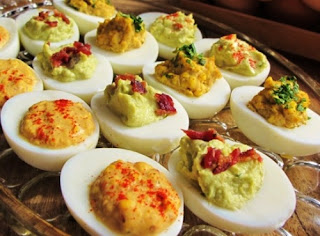 Fats
One large egg contains about 5 grams of fat. The majority of fat in an egg is unsaturated and is regarded to be the best type of fat to be included in a balanced diet. Saturated fats should be limited to less than 10 percen of your daily calories. For example, a diet consisting of 1,800 calories should limit saturated fat to no more than 20 grams. A large egg contains less than 2 grams of saturated fat.
Omega-3 fatty acids
Eggs are also a rich supply of omega-3fatty acids. These are mainly in the form of docosahexaenoic acid (DHA), which helps with the maintenance of brain function and normal vision.
These fatty acids are most commonly found in oily fish, and so eggs provide an alternative source for people that are unable to eat fish.
Eggs and cholesterol
One medium-sized egg that weighs 44 grams typically contains 164 milligrams of cholesterol. However, evidence has shown there is little, if any, relationship between cholesterol found in food and heart disease or blood cholesterol levels.
As eggs are low in saturated fats, the effect that they have on blood cholesterol is deemed to be clinically insignificant.
Of course eggs labelled as free range in supermarkets, which meet the 10,000 hens per hectare density approved by politicians have the same nutritional values as cage eggs - because the hens eat exactly the same processed food.
Fats
One large egg contains about 5 grams of fat. The majority of fat in an egg is unsaturated and is regarded to be the best type of fat to be included in a balanced diet. Saturated fats should be limited to less than 10 percen of your daily calories. For example, a diet consisting of 1,800 calories should limit saturated fat to no more than 20 grams. A large egg contains less than 2 grams of saturated fat.
Omega-3 fatty acids
Eggs are also a rich supply of omega-3fatty acids. These are mainly in the form of docosahexaenoic acid (DHA), which helps with the maintenance of brain function and normal vision.
These fatty acids are most commonly found in oily fish, and so eggs provide an alternative source for people that are unable to eat fish.
Eggs and cholesterol
One medium-sized egg that weighs 44 grams typically contains 164 milligrams of cholesterol. However, evidence has shown there is little, if any, relationship between cholesterol found in food and heart disease or blood cholesterol levels.
As eggs are low in saturated fats, the effect that they have on blood cholesterol is deemed to be clinically insignificant.
Of course eggs labelled as free range in supermarkets, which meet the 10,000 hens per hectare density approved by politicians have the same nutritional values as cage eggs - because the hens eat exactly the same processed food.
 Fats
One large egg contains about 5 grams of fat. The majority of fat in an egg is unsaturated and is regarded to be the best type of fat to be included in a balanced diet. Saturated fats should be limited to less than 10 percen of your daily calories. For example, a diet consisting of 1,800 calories should limit saturated fat to no more than 20 grams. A large egg contains less than 2 grams of saturated fat.
Omega-3 fatty acids
Eggs are also a rich supply of omega-3fatty acids. These are mainly in the form of docosahexaenoic acid (DHA), which helps with the maintenance of brain function and normal vision.
These fatty acids are most commonly found in oily fish, and so eggs provide an alternative source for people that are unable to eat fish.
Eggs and cholesterol
One medium-sized egg that weighs 44 grams typically contains 164 milligrams of cholesterol. However, evidence has shown there is little, if any, relationship between cholesterol found in food and heart disease or blood cholesterol levels.
As eggs are low in saturated fats, the effect that they have on blood cholesterol is deemed to be clinically insignificant.
Of course eggs labelled as free range in supermarkets, which meet the 10,000 hens per hectare density approved by politicians have the same nutritional values as cage eggs - because the hens eat exactly the same processed food.
Fats
One large egg contains about 5 grams of fat. The majority of fat in an egg is unsaturated and is regarded to be the best type of fat to be included in a balanced diet. Saturated fats should be limited to less than 10 percen of your daily calories. For example, a diet consisting of 1,800 calories should limit saturated fat to no more than 20 grams. A large egg contains less than 2 grams of saturated fat.
Omega-3 fatty acids
Eggs are also a rich supply of omega-3fatty acids. These are mainly in the form of docosahexaenoic acid (DHA), which helps with the maintenance of brain function and normal vision.
These fatty acids are most commonly found in oily fish, and so eggs provide an alternative source for people that are unable to eat fish.
Eggs and cholesterol
One medium-sized egg that weighs 44 grams typically contains 164 milligrams of cholesterol. However, evidence has shown there is little, if any, relationship between cholesterol found in food and heart disease or blood cholesterol levels.
As eggs are low in saturated fats, the effect that they have on blood cholesterol is deemed to be clinically insignificant.
Of course eggs labelled as free range in supermarkets, which meet the 10,000 hens per hectare density approved by politicians have the same nutritional values as cage eggs - because the hens eat exactly the same processed food.
Monday, February 19, 2018
100 donors needed to meet crowd funding target for free range webinars
Everyone can help Freerangr Eggs reach our initial target of 100 donors to the crowd funding campaign for developing webinars encouraging more free range farms to be established. The webinars will be free for participants and each will receive a copy of our eBook on setting up a free range farm. To help, click
https://www.gofundme.com/2tar52c
Tuesday, February 13, 2018
Egg Labelling nonsense in Australia
Free range egg farmers in Australia will be hit with greater compliance costs - thanks to incompetent politicians and bureaucrats. Already , eggs are the only fresh food which is required to carry a nutrition information panel. Producers of meat, fish and vegetables are not required to print nutritional information panels on their products - so why are egg farmers penalised? To make it even worse, all egg producers print the same nutritional information on their cartons, because they are downloaded from a central site - so they are all identical- serving no useful purpose for consumers.
The Nutritional information panels on food products are supposed to allow consumers to compare the food values of different products. breakfast cereals,processed foods etc - but egg producers who comply with regulations are caught up in this rubbish in a meaningless jumble of red tape. The details are usually so small that no-one can read them.On top of that, because politicians were too lazy to adopt a clear definition of free range, from April we will be required to add on our already over-crowded labels the number of hens we have, per hectare.
Amendment to Consumer Law could define free range properly
Rebekha Sharkie, Federal MP for Mayo, South Australia, a member of the Nick Xenophon Team has tabled an amendment in Parliament to Australian Consumer Law – which, if passed, will properly define the meaning of free range eggs.
The amendment reads: “eggs will only be permitted to be represented as free range eggs if they are laid by hens that are able to move about freely on an open range during daylight hours on most days, and that the majority of such hens do in fact move about freely on an open range during daylight hours.
The amendment will ensure that eggs cannot be represented as free range eggs if they are laid by hens that are subject to a stocking density of more than 1500 hens per hectare.
It seems unlikely that the amendment will be supported, but good on her for trying! This is exactly what Ministers and bureaucrats should have done to ensure the integrity of the egg industry.
Monday, February 12, 2018
Draft welfare standards still open for comment
There’s just two weeks remaining for the community and interested parties to have their say on the draft Australian Animal Welfare Standards and Guidelines for Poultry and the associated Regulation Impact Statement (RIS).
The draft standards from Animal Health Australia, move from the existing voluntary system to national regulation. But the regulation is inadequate, a better option would be to legislate the Model Code.The document has been open for public consultation since Monday 27 November 2017 and will close for comment at 5pm Monday 26 February 2018.
Kathleen Plowman, Animal Health Australia (AHA) CEO, encourages all interested parties to submit their views on the draft document and the associated RIS, which identifies the key costs and benefits of the draft standards and provides alternative options.Submissions should be emailed to publicconspoultry@animalhealthaustralia.com.au
We will be submitting something like this:"In the RIS , the policy objective of the action is identified as: 'To minimise risks to poultry welfare; and to reduce both industry uncertainty and excess regulatory burden in a way that is practical for implementation and industry compliance. The main criterion for evaluating the proposed standards and the feasible alternatives is net benefit for the community.
The most effective way to acheive this objective is to legislate the existing Model Code of Practice for the Welfare of Animals (Domestic Poultry) as a mandatory standard rather a voluntary guideline. This action would achieve the claimed objectives of the new welfare regulations. As the code is widely accepted by the industry there will be no additional cost to industry.
Thursday, February 08, 2018
Free range guidance from the ACCC at last!
The Australian Competition and Consumer Commission has released guidance for egg producers on its approach to enforcing the new National Information Standard on free range eggs, which comes into effect on April 26 2018.
Under the new Standard, egg producers cannot use the words ‘free range’ on their egg cartons unless the eggs were laid by hens that:
had meaningful and regular access to an outdoor range during daylight hours,were able to roam and forage on the outdoor range,
were subject to a stocking density of 10 000 hens or less per hectare, and that outdoor stocking density is prominently displayed on the packaging or signage.
“Shoppers are willing to pay a premium for free range eggs, but only if the chickens genuinely have regular access to an outdoor range. From April 26, free range must only be used by compliant egg producers so consumers can have confidence in the products they are buying,” ACCC Chairman Rod Sims said.
“If an egg producer’s hens are using the outdoor range on a regular basis and they satisfy the stocking density requirements, then the producer can call their eggs free range.”
The guidance also explains egg producers’ obligations under the misleading or deceptive conduct provisions of Australian Consumer Law. This includes representations made through marketing activities such as product packaging and advertising.
“If egg producers use images, pictures, or words, other than free range, that imply their eggs are free range when they are not, this would likely raise concerns under the Australian Consumer Law,” Mr Sims said.
“The ACCC is monitoring the market to ensure that free range claims are truthful and accurate and will continue to take action against those that don’t.” The industry expects there will be many more prosecutions because many corporate egg producers with intensive facilities have for years been marketing their eggs as free range and they don't propose to change their ways.
The debate over outdoor stocking densities on free range farms was hi-jacked by animal rights groups. It is more than a welfare issue – it’s about land sustainability. A laying hen produces half a cubic metre of manure a year. So with a stocking density of 10,000 hens per hectare farmers will see their land covered with 5000 cubic metres of manure per hectare every year.
As chicken manure has the highest amount of nitrogen,phosphorus, and potassium of all manures, it will likely render the land useless for farming within a few years. Contamination of groundwater and water courses is also likely.
Wednesday, February 07, 2018
Sustainable farm management
Freeranger Eggs at Grantville is an example of sustainable farming.
The farm management plan takes a three pillars approach to how the farm operates. Land sustainability is one pillar, but equally important are food safety and animal welfare. Growth is not a part of our philosophy. we need to encourage people to set up more farms, not upscale existing farm businesses. We believe that will support more people working the land fairly and will ensure long-term food security.
Despite all the political bickering in Canberra over emissions trading scheme targets, some small businesses have been playing their part in addressing the problem. Freeranger Eggs has been getting on with mitigating the impact of carbon emissions. The farm's carbon footprint is limited by imposing a food miles policy for deliveries, using recycled materials and equipment whenever possible, utilising solar power and mechanical processes and an effective waste reduction programme.
As a result, the 1200-chicken farm generates only about 60 tonnes of CO2 each year.
But it is better than carbon neutral, it is carbon positive. The average organic matter in soil tests was 4.1 per cent in 2004, in 2006 it was 6.0 per cent, and in 2009 it was 7.9 percent. Calculations based on 2-inch deep samples, show that over those five years the farm sequestered about 14 tons of CO2 per acre or four tonnes of carbon per acre on the grasslands. Further testing and calculations have not been carried because there has been a total lack of interest in the results.
The farm applies no chemical fertilisers, herbicides, or pesticides and this policy increases the biological life in the soil and increases the rate of carbon sequestration. Rotational grazing is practised on the pastures – taking advantage of photosynthesis to pull CO2 into the plants and then into the roots from where it transfers to the soil.
In addition, every year at least another tonne of CO2 per acre continues to be sequestered by the regular regeneration of Kangaroo Apples (Solanum laciniatum) in the main paddocks.
Native vegetation has been protected on approximately 100 acres of the property and regeneration there sequesters a further tonne of CO2 per acre.
This brings a grand total of 1500 tonnes of CO2 sequestered on this property over five years – an average rate of 300 tonnes per year compared with the farm's carbon output of around 60 tonnes.
On days of full sun the solar panels on the farm shed generate 13 - 17kW of electricity a day and as on average the farm consumes just 9kW a day it helps the bottom line.
Thw farm is a true free range operation with small flocks of chickens in separate paddocks with mobile roost houses where eggs are laid.An eBook is available on setting up free range eggs farm s and we are developing a series of webinars. Crowd funding is being sought to prepare the webinars . Details on the freeranger eggs website. Www.freeranger.com.au
Freeranger Eggs gained international recognition in 2012 as the Australian winner of the Energy Globe Award.
Sunday, February 04, 2018
Sunny Queen joins 'free range' fight
Major Australian egg company Sunny Queen which sells more than 70 million eggs a year, labelled cage, barn and free range, has admitted that an outdoor stocking density of 1500 hens per hectare is the accepted standard for free range production. Speaking on ABC television's Landline programme, Managing Director John O'Hara said "the free-range market will grow for a "little while longer before plateauing." The Queensland-based company has set up a new free range operation meeting the stocking density recommended in the Model Code of Practice for the Welfare of Animals (Domestic Poultry), but it still buys and packages eggs from independent suppliers who run their hens at much higher densities. The company says that demand for cage eggs has slumped in the last decade from 70 per cent of sales to 55 per cent, with eggs labelled as 'free-range' now taking 40 per cent of the market in Australia.Buyers should be aware that most eggs labelled as free range in major supermarkets do not meet consumer expectations. Stay away from supermarkets if you want free range eggs.
Saturday, February 03, 2018
History of the chicken
The Smithsonian Institution tells us that it is generally accepted that domestic chickens are direct descendants of the Red Jungle Fowl, Gallus Gallus of south east asia. The chicken’s star turn came in 2004, when an international team of geneticists produced a complete map of the chicken genome. The chicken was the first domesticated animal, the first bird—and consequently, the first descendant of the dinosaurs—thus honoured. The genome map provided an excellent opportunity to study how millennia of domestication can alter a species. In a project led by Sweden’s Uppsala University, Michael Zody and his colleagues researched the differences between the red jungle fowl and its barnyard descendants, including “layer breeds raised to produce eggs and broilers for eating. The researchers found important mutations in a gene designated TBC1D1, which regulates glucose metabolism. In the human genome, mutations in this gene have been associated with obesity, but it’s a positive trait in a creature destined for the dinner table. Another mutation that resulted from selective breeding is in the TSHR (thyroid-stimulating hormone receptor) gene. In wild animals this gene coordinates reproduction with day length, confining breeding to specific seasons. The mutation disabling this gene enables chickens to breed—and lay eggs—all year long. Once chickens were domesticated, cultural contacts, trade, migration and territorial conquest resulted in their introduction, and reintroduction, to different regions around the world over several thousand years. Although inconclusive, evidence suggests that ground zero for the bird’s westward spread may have been the Indus Valley, where the city-states of the Harappan civilization carried on a lively trade with the Middle East more than 4,000 years ago. Archaeologists have recovered chicken bones from Lothal, once a great port on the west coast of India, raising the possibility that the birds could have been carried across to the Arabian Peninsula as cargo or provisions. By 2000 B.C., cuneiform tablets from Mesopotamia refer to “the bird of Meluhha,” the likely place name for the Indus Valley
Read more: https://www.smithsonianmag.com/history/how-the-chicken-conquered-the-world-87583657/#GUeWc4bgEpAlKjmX.99
Once chickens were domesticated, cultural contacts, trade, migration and territorial conquest resulted in their introduction, and reintroduction, to different regions around the world over several thousand years. Although inconclusive, evidence suggests that ground zero for the bird’s westward spread may have been the Indus Valley, where the city-states of the Harappan civilization carried on a lively trade with the Middle East more than 4,000 years ago. Archaeologists have recovered chicken bones from Lothal, once a great port on the west coast of India, raising the possibility that the birds could have been carried across to the Arabian Peninsula as cargo or provisions. By 2000 B.C., cuneiform tablets from Mesopotamia refer to “the bird of Meluhha,” the likely place name for the Indus Valley
Read more: https://www.smithsonianmag.com/history/how-the-chicken-conquered-the-world-87583657/#GUeWc4bgEpAlKjmX.99
 Once chickens were domesticated, cultural contacts, trade, migration and territorial conquest resulted in their introduction, and reintroduction, to different regions around the world over several thousand years. Although inconclusive, evidence suggests that ground zero for the bird’s westward spread may have been the Indus Valley, where the city-states of the Harappan civilization carried on a lively trade with the Middle East more than 4,000 years ago. Archaeologists have recovered chicken bones from Lothal, once a great port on the west coast of India, raising the possibility that the birds could have been carried across to the Arabian Peninsula as cargo or provisions. By 2000 B.C., cuneiform tablets from Mesopotamia refer to “the bird of Meluhha,” the likely place name for the Indus Valley
Read more: https://www.smithsonianmag.com/history/how-the-chicken-conquered-the-world-87583657/#GUeWc4bgEpAlKjmX.99
Once chickens were domesticated, cultural contacts, trade, migration and territorial conquest resulted in their introduction, and reintroduction, to different regions around the world over several thousand years. Although inconclusive, evidence suggests that ground zero for the bird’s westward spread may have been the Indus Valley, where the city-states of the Harappan civilization carried on a lively trade with the Middle East more than 4,000 years ago. Archaeologists have recovered chicken bones from Lothal, once a great port on the west coast of India, raising the possibility that the birds could have been carried across to the Arabian Peninsula as cargo or provisions. By 2000 B.C., cuneiform tablets from Mesopotamia refer to “the bird of Meluhha,” the likely place name for the Indus Valley
Read more: https://www.smithsonianmag.com/history/how-the-chicken-conquered-the-world-87583657/#GUeWc4bgEpAlKjmX.99
Friday, February 02, 2018
Freerange eggs offer an ideal rural small business opportunity
If you are thinking about setting up a small rural business, think about establishing a free range egg farm.
There is huge demand for more free range eggs, and consumers know that they can't trust labels on eggs found in supermarkets.
Everyone can help to establish more genuine, small scale free range eggs farms by supporting a programme of webinars demonstrating all the processes involved. The webinars will encourage hundreds more farms to be established all over Australia. Freeranger Eggs in South Gippsland and the Freeranger Club have run workshops in the past, but the webinars will reach far more potential egg farmers. An eBook on starting a free range farm is also available through the Freeranger website.
The preparation of the webinars is being supporting by a crowd funding appeal. To help, look at
https://www.gofundme.com/2tar52c
Wednesday, January 31, 2018
New TPP trade deal may hit Australian egg producers
The revised Trans Pacific Partnership trade deal. Which Trade Minister Steve Ciobo says is great may have negative results for Australian farmers.The deal could see the importation of a wide range of farm products - including eggs.
Canadian egg farmers have already expressed their disappointment, describing the deal as a failure to protect the future of Canada's egg farms. They say the deal will result in greater access for foreign eggs. Once fully implemented, Canadian egg farmers say they will lose the right to produce close to 291 million dozen eggs, with an additional 19 million dozen eggs added each year after the implementation phase. The total value of the trade deal represents close to$1 billion dollars in lost farm family income.
It seems likely that Australian egg farmers may be hit just as hard.
Wednesday, January 24, 2018
Why we do what we do at Freeranger Eggs
Sustainable land management
When we bought our property on the Bass River at Grantville, we soon realised its importance as part of the only remaining riparian forest on the river. Our vegetation also provided the only link between the Grantville Flora and Fauna Reserve and the Bass. Once that was firmly established in our minds we set about ensuring that production here became not only sustainable but renewable.
Self-renewing topsoil that is biologically active is essential for productive agriculture as well as a healthy environment. It is the over-riding requirement for the health of plants, animals and people. But unfortunately it's not something that's high on the radar of most farmers.
Appropriate management of soil biology in agriculture, horticulture, forestry and conservation areas is hard to find and is one of the most neglected natural resource issues in Australia. Most of our grasslands and croplands are nowhere near as healthy as they should be.
They often feature areas of bare ground, sheet and gully erosion, weeds and an almost complete lack of desirable plant species. It's an easy but gullible assumption that removing the weeds and replanting some 'better' species will solve the problems. Decades of experience have demonstrated that this simplistic approach rarely works.
The interactions between animals, plants and soil biota remain out of balance because the essential requirement of soil management has not been addressed. The consequent shortfall in ecosystem services, such as nutrient availability, results in costly (and damaging) supplements being added to the soils.
Landscapes are not degraded because they lack desirable species. The reality is that desirable species will not flourish when landscapes are degraded.
The traditional approach to land management has been to replace native vegetation with something that is 'more productive' (using exotic species and unbalanced chemical fertilisers) rather than adopting a multi-level, multispecies approach. There have been cosmetic attempts to make oversimplified ecosystems 'sustainable'. But it is a battle which cannot be won.
Until a preventative rather than a curative approach to land management is adopted, agricultural ‘problems’ such as soil compaction, low fertility, weeds, pests and diseases, salinity etc, will continue indefinitely.
Why spend buckets of money every year trying to change the soil balance or structure to meet the needs of exotic plant species (such as rye grass and clover) when there are perfectly adequate native species (such as miocrolaena stipoides) which thrive in low ph soils and out-perform the exotics in dry years.
Sustainable poultry management
Our free range hens spend as much time as they like outdoors grazing on pasture and doing what they do naturally – scratch around for bugs and worms. There is no need for them to be locked up as birds in each flock are protected from predators 24 hours a day by their Maremma guard dogs.
· Our feed (which supplements what our hens find in their paddocks) is from a certified feed mill which uses precise nutritional information to formulate a diet especially for us which ensures a superior, tasty, natural egg.
·The diet containing a balanced selection of grains with no colouring additives. Most egg producers add manufactured colouring agents to the hen's feed to enhance yolk colour. In natural conditions, there is no need for these additives, it's simply cheaper for these farms to buy a standard feed which includes colouring. Yolk colour should vary throughout the year depending on the amount of green feed which is available- if it doesn't, it's almost certain that colouring additives are being used.
· The supplementary vegetarian diet we use is high in specific nutrients: OMEGA 3, Vitamin E, Folate. The paddocks used by our hens contain a range of fodder plants, including native grasses such as Microlaena Stipoides, shrubs such as Kangaroo Apple and we encourage plant species like Purslane. Some strange people regard Purslane as a weed. But Purslane contains more Omega 3 fatty acids than any other leafy plant. It has 0.01 mg/g of eicosapentaenoicacid (EPA).We have no lighting in sheds so the hens can maintain their natural life rhythms. On farms where lights are installed in sheds, the hens are tricked into thinking its still daylight so they keep eating on laying eggs. Egg production on real free range farms drops in winter when daylight hours are reduced. For more details, go to our website: http://www.freeranger.com.au/
Monday, January 22, 2018
Real Freerange research shows that stocking density is important.
Academic researchers often produce theories and reports designed to demonstrate what 'free range' means in the egg industry. Their findings are usually based on carefully arranged criteria set by an organisation which funded the research and expected specific outcomes. Far better to rely on the experience of those in the industry actually running free range egg farms. Some people are fixated on the issue of animal welfare and they lose sight of matters like food safety and land sustainability. Outdoor stocking density is a key example. Academics found it easy to come up with results from research on small scale or short term projects to demonstrate that stocking densities had little or no impact on hen welfare. But it has been impossible for them to demonstrate that high densities had no detrimental impact on pasture quality, pollution of waterways, groundwater and the long term productivity of the land as a result of excessive nutrient loads. The maximum sustainable stocking density for poultry has been established at 1500 hens per hectare to minimise land degredation and ensure the long-term viability of the land.
Laying hens, like most if not all other animals, perform best when they are able to follow their natural behaviour. They clearly need shelter, food and water but they also need to wander around freely to forage, scratch, dust bathe and interact socially with others in the flock.

Unfair compliance costs for egg farmers
The cost of complying with a range of national and state regulations adds at least 20% to the cost of eggs in Australia.
Legitimate egg farmers are required to meet stringent planning regulations as well as food safety , packaging and labelling laws, while some operators are completely exempt from regulations.
This results in unfair competition with many thousands of eggs sold to unsuspecting consumers each week. Those eggs from non-compliant producers have a lower cost base and meet no food safety standards- presenting a severe risk to families. Politicians don't care. Ministers at State and Federal levels ignore the problem.
The industry needs a level playing field so that everyone who sells eggs is required to comply with the same standards.
Saturday, January 20, 2018
Crowd Funding for free range webinars
Anyone who wants to encourage more people to set up genuine free range egg farms can support our Crowd Funding appeal to develop a series of on-line webinars. These will encourage more traditional free range egg farms to be established throughout the country. We are is getting more requests about running workshops from people wanting to enter the free range industry. The extra activity has been brought on by the political decision to allow consumers to be misled by industrial-scale egg producers who are now legally allowed to label their eggs as free range. The Crowd funding appeal is at: https://www.gofundme.com/2tar52c
Tuesday, January 16, 2018
Take it slow when setting up a farm
When you first think about starting a farming business, talk to an accountant before you get too far, to ensure that you maximise the benefits.You may be able to set up a farm with little net cost by offsetting existing income -using cash that would otherwise disappear in tax.
It’s important to think about the type of business you want to run and the scale of the enterprise. If you need to minimise spending, then setting up a small=scale free range egg farm may be ideal. Get as much information as you can and a good starting point is reading the eBook available from Freeranger eggs. Check out our website at www.freeranger.com.au
Wednesday, January 10, 2018
The taste of eggs depends on the hens' diet
“Why don’t my eggs taste as good as yours?” Is a question we are often asked, even by people with the same breed of hens – Isa Browns. When I speak to them about how they keep their hens, the answer is often that they are kept in yards and fed layer pellets.
Well, that’s the difference, our hens are in paddocks with unrestricted access to pasture including insects, worms etc and a supplementary diet of grains.
Commercial layer pellets contain a wide range of fillers, binders and additives including meat meal and colouring pigments whereas our feed is formulated to our specification by a Feed Safe certified mill, Reid Stockfeeds.
The quality of each egg is determined by what the hen has eaten. With a natural diet, the eggs will taste as they should.
Back yard eggs will seldom taste as good as eggs from genuine free range hens. Because their diet is limited.
Tuesday, January 09, 2018
Egg graders for free range farms
There are various brands of egg grading machines on the market suitable for free range egg farms Some, such as the egomatic are readily available second hand but other makes are available, such as the Riva Selegg, Zenyer, Mobanette, OvoSelect and the Nuevo grader. Most of them are probably only available new from a dealer.


Free egg production and food safety program for Freeranger Club members
Our Egg Production and Food Safety Program is available as a free download to all who join the Freeranger Club. It will help new egg producers to establish good systems. Check out details on our website


Wednesday, January 03, 2018
new environmental guidelines being developed for Australia's egg industry
Australian Eggs Ltd is preparing new environmental guidelines for the egg industry However the new guidelines for free range operations probably won't be any improvement on the old ones published in 2008.The industry is dominated by corporate players who don't accept that free range is a niche market with small-scale production. Corporate egg producers want to maximise returns by running at least 10,000 hens per hectare,
when the maximum sustainable density is 1500 per hectare.Each hen produces half a cubic metre of manure per year - so at a stocking density of 10,000 hens per hectare, a colossal 5000 cubic metres of manure is dumped on each hectare every year. When large numbers of animals are farmed intensively in industrial units in an attempt to maximise profits, problems are inevitable. Disease control and food safety are prime issues as is environmental sustainability. Since the Second World War agricultural practices have gone through massive changes in mechanisation, chemical use and large-scale intensive farming.
As a result of increasing the density of domestic farm animals, reported farm pollution incidents have sky-rocketed. In some areas farm waste is a major problem. Some countries report that about half of all serious water pollution incidents are caused by manure run-off from farms. Poultry, cows and pigs are the farm animals most responsible for the pollution. Livestock production occupies 70% of all land used for agriculture and 30% of the planet’s land surface. It is responsible for 18% of the world’s greenhouse gas emissions as measured in CO2 equivalents. It also generates 64% of the ammonia, which contributes to acid rain and acidification of ecosystems.
A large quantity of animal waste is generated by concentrated animal feeding operations and disposal of the waste has been a major problem. If the soil or plants are unable to absorb the nutrients the run-off gets into water systems. On Intensive free range farms running 10,000 hens per hectare, the huge volume of manure on paddocks poses an ecological risk to water courses because of the high nutrient load.
Farm waste has led to the growth of toxic algae in waterways (algal blooms), the development of parasitic infections on various species.
This is why all farms should follow an Environmental Management plan and why low stocking densities must be maintained.

Monday, January 01, 2018
2018 should be a better year
Happy New Year to all our customers and fellow farmers. Let's hope that 2018 is a better year because genuine producers of free range eggs have been beset by ridiculous standards and regulations drawn up by incompetent bureaucrats and politicians as well as unfair competition from corporate operators pretending that their eggs are free range and unregulated back-yard operators who pay no registration fees and meet no food safety standards.
 Let's hope that 2018 is a better year because genuine producers of free range eggs have been beset by ridiculous standards and regulations drawn up by incompetent bureaucrats and politicians as well as unfair competition from corporate operators pretending that their eggs are free range and unregulated back-yard operators who pay no registration fees and meet no food safety standards.
Sunday, December 31, 2017
Conditional approval for avian influenza vaccine
Potentially catastrophic problems of Avian influenza may soon be diminished with the wide availability of a vaccine for poultry.The U S Department of Agriculture has conditionally approved the first DNA vaccine for poultry in the battle against avian influenza.
The conditional license granted to Montana-based AgriLabs for high pathogenic H5 will provide a tool for US poultry producers if stockpiling is needed for future cases of avian influenza.
A spokesman for the company said the move was a major milestone in meeting the promise of DNA vaccines in animal health.
DNA vaccines are attractive because they don’t expose the animals being treated to disease-producing organisms and there is no risk of a modified pathogen mutating back to a virulent form. The vaccines also provide the ability to differentiate among infected and vaccinated animals. The approval will allow production of the vaccine to be stockpiled for future use in the event of an outbreak.

Saturday, December 30, 2017
Setting up a free range farm
Clear consumer demand for free range eggs has generated a strong increase in the number of people thinking about starting their own free range egg business.
A good starting point is reading the eBook on starting a free range farm available on the Freeranger Eggs website: www.freeranger.com.au . Detailed information is available on the Freeranger Club downloads page about things like shed requirements, feed,stock management, food safety, egg packaging and labelling.
When deciding to set up a free range egg farm, take the time to plan it properly. Find out the zoning of the land and talk to your local Council planning department about their requirements. It’s also worth contacting the State Department of Agriculture. You can find on-line resources in most states. In Victoria, contact: http://agriculture.vic.gov.au/agriculture/farm-management/business-management/permits/guidelines-for-rural-planning-applications. Once that is sorted, talk to your Council Environmental Health Department about any specific requirements they have before you get underway. Mobile sheds provide an ideal and low-cost way to become an egg producer for your local area.
 Mobile sheds provide an ideal and low-cost way to become an egg producer for your local area.
Thursday, December 28, 2017
Sustainability and food safety are both vital on free range farms
The Freeranger Eggs farm at Grantville is an example of sustainable farming.
The farm management plan takes a three pillars approach to how the farm operates. Animal welfare is one pillar, but equally important are land sustainability and food safety. Growth is not a part of our philosophy. we need to encourage people to set up more farms, not upscale existing farms. We believe that will support more people working the land fairly and will ensure long-term food security.
Despite all the political bickering in Canberra over emissions trading scheme targets, some small businesses have been playing their part in addressing the problem. Freeranger Eggs in Victoria has been getting on with mitigating the impact of carbon emissions. The farm's carbon footprint is limited by imposing a food miles policy for deliveries, using recycled materials and equipment whenever possible, utilising solar power and mechanical processes and an effective waste reduction programme.
As a result, the 1200-chicken farm generates only about 60 tonnes of CO2 each year.
But it is better than carbon neutral, it is carbon positive. The average organic matter in soil tests was 4.1 per cent in 2004, in 2006 it was 6.0 per cent, and in 2009 it was 7.9 percent. Calculations based on 2-inch deep samples, show that over those five years the farm sequestered about 14 tons of CO2 per acre or four tonnes of carbon per acre on the grasslands. Further testing and calculations have not been carried because there has been a total lack of interest in the results.
The farm applies no chemical fertilisers, herbicides, or pesticides and this policy increases the biological life in the soil and increases the rate of carbon sequestration. Rotational grazing is practised on the pastures – taking advantage of photosynthesis to pull CO2 into the plants and then into the roots from where it transfers to the soil.
In addition, every year at least another tonne of CO2 per acre continues to be sequestered by the regular regeneration of Kangaroo Apples (Solanum laciniatum) in the main paddocks.
Native vegetation has been protected on approximately 100 acres of the property and regeneration there sequesters a further tonne of CO2 per acre.
This brings a grand total of 1500 tonnes of CO2 sequestered on this property over five years – an average rate of 300 tonnes per year compared with the farm's carbon output of around 60 tonnes.
On days of full sun the solar panels on the farm shed generate 13 - 17kW of electricity a day and as on average the farm consumes just 9kW a day it helps the bottom line.
Thw farm is a true free range operation with small flocks of chickens in separate paddocks with mobile roost houses where eggs are laid.An eBook is available on setting up free range eggs farm s and we are developing a series of webinars. Crowd funding is being sought to prepare the webinars . Details on the freeranger eggs website. Www.freeranger.com.au
Freeranger Eggs gained international recognition in 2012 as the Australian winner of the Energy Globe Award.
Tuesday, December 26, 2017
Colouring additives in poultry feed
There are world-wide problems with colouring additives in poultry feed
All major egg producers and many small ones - even those who claim to be free range and organic - use colouring additives in the feed they give their hens.
Their use is completely unnecessary in a free range flock, as hens running on quality pasture and at low stocking densities will obtain enough carotenoids from the green feed in the paddock to maintain good yolk colour. The colour will vary – depending on the time of year and what each hen has been eating – but many egg producers want to con consumers by using additives to provide consistent, bright yolk colour.
Many of those additives are synthetic - adding to the chemical cocktail mix in food. But even those which are claimed to be 'natural' are manufactured in factories. What the manufacturers mean by using the word 'natural' is that the additives may be derived from natural products but are processed and concentrated into a powder or liquid.
Three of the most widely used egg yolk pigmenters are:
Canthaxanin or Canthaxanthin which appears to be an unsafe additive. It can cause diarrhoea, nausea, stomach cramps, dry and itchy skin, hives, orange or red body secretions, and other side effects.
Do not use canthaxanthin if you experience breathing problems; tightness in the chest; swelling of the mouth, tongue or throat; a skin rash or hives; you are pregnant or breast-feeding or you are allergic to vitamin A or carotenoids.
Capsicum Allergic reactions to capsicum may occur. Stop eating eggs with capsicum-based colouring and seek emergency medical attention if you experience symptoms of a serious allergic reaction including difficulty breathing; closing of the throat; swelling of the lips, tongue, or face; or hives. Other less serious side effects have also been reported. Talk to your doctor, pharmacist, or health care provider if you experience upset stomach; heartburn; diarrhoea; migraine attacks or burning sensation in the mouth or throat. Use of Capsicum is not recommended if you are pregnant. If you are or will be breast-feeding while eating food containing Capsicum, check with your doctor or pharmacist to discuss the risks to your baby. Capsicum colourings can bring on anaphylactic shock. See details about which plants generate these problems on this site at the University of Maryland: http://www.umm.edu/altmed/articles/anaphylaxis-000008.htm
Marigold Some people experience breathing problems, tightness in the chest, swelling of the mouth, tongue or throat. A skin rash or hives may occur. Yolk colour will always vary unless colouring additives are used so if yolks are all the same deep colour - be suspicious.

Tuesday, December 19, 2017
How to set up your own free range farm
If you have ever thought about establishing your own free range egg farm. check out the freeranger website for ideas. A detailed eBook is available to guide you through the process. Your enterprise needn't be expensive, unless you want to be big or to have fully automated everything. Free range egg production really is a niche market as part of a boutique industry, with small flock sizes and low density production. As well as having the eBook available we are planning a series of webinars for which we are seeking crowd funding.  free range egg production provides additional income for existing farms and smallholdings, as well as for people with no farming background.
 free range egg production provides additional income for existing farms and smallholdings, as well as for people with no farming background.
Saturday, December 16, 2017
this is a top 20 egg farm blog
Feedspot judges this blog to be one of the top 20 poultry blogs in the world.


Friday, December 15, 2017
Sustainable farm practices are key to long term viability
The stocking density of any farm animals is a critical factor in the long term sustainability of farmland. With chickens, the maximum stocking density of 1500 hens per hectare was established by the industry, academics, politicians and bureaucrats when they prepared the Model Code of Practice for the Welfare of Animals (Domestic Poultry). Nutrients and trace elements in manure can accumulate in the soil, making it toxic for vegetation as well as polluting ground and surface water.
A laying hen produces half a cubic metre of manure a year. So with a stocking density of 10,000 hens per hectare approved by Ministers for Consumer Affairs, farmers who follow their advice will see their land covered with 5000 cubic metres of manure per hectare every year.
As chicken manure has the highest amount of nitrogen,phosphorus, and potassium of all manures, it will likely render the land useless for farming within a few years. Contamination of groundwater and water courses is also likely.

Thursday, December 14, 2017
Busy holiday time pushes demand beyond production
We are heading into our busy holiday season, with tourists flocking to Philip Island for Christmas and New Year. So we know we won ‘t be able to keep up with the excessive demand – but we will do our best. We will be able to meet the requirements of our regular shops and restaurants – but we certainly won’t be able to meet new orders even though the hens are laying well and we have a new flock of Isa Browns arriving just prior to Christmas.

Wednesday, December 13, 2017
Set up more free range farms
Proposed changes to farm planning regulations in Victoria, and the national decision by Ministers for Consumer Affairs to allow a huge stocking density of 10,000 chickens per hectare on free range farms has led to a strong increase in the number of people thinking about starting their own free range egg business.
A good starting point is reading the eBook on starting a free range farm available on the Freeranger Eggs website: "www.freeranger.com.au When you decide to set up a free range egg farm, take the time to plan it properly. Find out the zoning of the land and talk to your local Council planning department about their requirements. It’s also worth contacting the State Department of Agriculture. You can find on-line resources in most states. In Victoria, contact: http://agriculture.vic.gov.au/agriculture/farm-management/business-management/permits/guidelines-for-rural-planning-applications. Once that is sorted, talk to your Council Environmental Health Department about any specific requirements they have before you get underway.

Tuesday, December 12, 2017
Gate sales are going strong 24/7
Our gate sales are still going extremely well.Each week they add up to as many or more than we used to sell at markets. Hopefully the yellow cool box inside our front gate will continue to be popular over the summer months as we will have plenty of eggs. A new flock of Isa Brown pullets arrive just before Christmas so they will be in full lay by the middle of January.
The cool box is stocked every day and the eggs are available anytime, day or night. Anyone needing a special order (multiple dozens, eggs on trays or specific sizes) just send us an email or ring and we will package your order in the box. 

Monday, December 11, 2017
Model Code should be legislated as the free range standard
Political dithering over hen welfare and the definition of free range shows the high level of incompetence displayed by politicians and bureacrats. Rather than dream up a raft of new legislation and standards, simply enshrine into law The Model Code of Practice for the Welfare of Animals (Domestic Poultry).
Development of the Model Code of Practice for the Welfare of Animals – Domestic Poultry 4th Edition,
When the current version of the Code was approved by the Primary Industries Ministerial Council and printed in 2002, it was scheduled for review in 2010. It was a development of an earlier version of the Model Code. It is essential for the free range sector of the egg industry to ensure that intensive production standards tare not adopted in place of the extensive requirements of the current code. There has been no science behind high density free range proposals (other than the certainty of increased profits. No scientific review of production processes has been undertaken to demonstrate that the standards contained within the current voluntary Model Code are no longer applicable to the industry. The stocking density of 1500 hens per hectare for free range hens was developed by applying well established principles of agronomy. The issue of the upper limit on the long term stocking rate was debated strongly at the time, following pressure from local Councils and the EPA about how some farms were operating. Experience was taken into account of people who had farmed free range layers in the 1950’s and 60's, when all egg production was based on free range principles. Hens were often run under citrus trees It was recognised that for an operation to be sustainable, the stocking rate had to be low - less than 300 birds/acre (750/hectare). It was agreed that such a system should be regarded as Free Range egg production and the hens were to have access to the range during daylight hours. There was some dispute by new entrants to the industry who believed that they could design pasture rotation systems around their sheds that would allow higher rates. So it was decided to take an empirical approach and work out what the maximum stocking rate could be to avoid the measurable negative impacts of nutrient run off and soil degradation and still be theoretically possible to maintain pasture cover and avoid the issue of dust. Some argued that as most hens were in sheds at night and may be locked in for part of the day so that only a portion of the hens actually entered the range area at any one time, the impact was lessened. The dairy industry was very big at that time and local agronomists had data on the effects of applying very high rates of poultry manure on irrigated pasture. The agronomists studied the data on the maximum nutrient uptake a well maintained irrigated pasture could support and also avoid the problems of salinity build up observed in the dairy pastures. The stocking rate was calculated and a stocking density of up to 600 birds/acre (1500/hectare) was regarded as the maximum possible for long term sustainability. At the time the Code was approved, it was accepted that to maintain consumer credibility, visitors or passers-by had to see the birds out and about on the range. It was also accepted that there is no valid animal management need to lock in the layers in the morning or during inclement weather. Those currently involved in free range egg production agree that the fundamental elements of the Model Code, or other regulations introduced by Governments should be: a maximum stocking density of 1500 hens per hectare; stocking density must be reduced in conditions where pasture or other vegetative cover cannot be maintained at the maximum stocking density; no beak trimming of hens is permitted except when other methods of controlling outbreaks of severe feather pecking or cannibalism have been tried and failed (using the same criteria in the current Model Code); and pullets must be allowed to range freely once they are fully feathered (about six weeks old).
Tuesday, December 05, 2017
International Egg Commission biosecurity checklist for all egg farms.
The International Egg Commission (IEC) has developed a Practical Biosecurity Check List designed to help egg businesses improve their overall biosecurity.  The comprehensive Biosecurity Check List is freely available to the egg industry. It provides practical guidelines for egg farmers and producer businesses, to help reduce the risk of infection.
The guide can downloaded here:http://1pfp2yazjqr27ku7g3h8zwwx-wpengine.netdna-ssl.com/wp-content/uploads/2017/09/IEC-BIO-BROCHURE-FINAL-11.09.17.pdf or from https://www.internationalegg.com/iec-avian-influenza-expert-groups-new-practical-biosecurity-check-list-is-available-to-download/
Details are also on the Freeranger Club member downloads page of the Freeranger Eggs website http://www.freeranger.com.au/
The comprehensive Biosecurity Check List is freely available to the egg industry. It provides practical guidelines for egg farmers and producer businesses, to help reduce the risk of infection.
The guide can downloaded here:http://1pfp2yazjqr27ku7g3h8zwwx-wpengine.netdna-ssl.com/wp-content/uploads/2017/09/IEC-BIO-BROCHURE-FINAL-11.09.17.pdf or from https://www.internationalegg.com/iec-avian-influenza-expert-groups-new-practical-biosecurity-check-list-is-available-to-download/
Details are also on the Freeranger Club member downloads page of the Freeranger Eggs website http://www.freeranger.com.au/
 The comprehensive Biosecurity Check List is freely available to the egg industry. It provides practical guidelines for egg farmers and producer businesses, to help reduce the risk of infection.
The guide can downloaded here:http://1pfp2yazjqr27ku7g3h8zwwx-wpengine.netdna-ssl.com/wp-content/uploads/2017/09/IEC-BIO-BROCHURE-FINAL-11.09.17.pdf or from https://www.internationalegg.com/iec-avian-influenza-expert-groups-new-practical-biosecurity-check-list-is-available-to-download/
Details are also on the Freeranger Club member downloads page of the Freeranger Eggs website http://www.freeranger.com.au/
The comprehensive Biosecurity Check List is freely available to the egg industry. It provides practical guidelines for egg farmers and producer businesses, to help reduce the risk of infection.
The guide can downloaded here:http://1pfp2yazjqr27ku7g3h8zwwx-wpengine.netdna-ssl.com/wp-content/uploads/2017/09/IEC-BIO-BROCHURE-FINAL-11.09.17.pdf or from https://www.internationalegg.com/iec-avian-influenza-expert-groups-new-practical-biosecurity-check-list-is-available-to-download/
Details are also on the Freeranger Club member downloads page of the Freeranger Eggs website http://www.freeranger.com.au/
Monday, December 04, 2017
Intensive egg production facilities dominate in Australia but there's still a place for traditional free range family farms
The increasing scale of large, intensive egg production facilities is demonstrated in this article published by Poultry Hub.There are now very few traditional free range farms left in Australia because of Government red tape and pressure from big business.Only the massive corporate businesses have sufficient volumes to meet the requirements of major supermarkets - so it's a waste of time looking in supermarkets if people want genuine free range eggs.
In Australia, the chicken layer industry, or egg industry, is an important intensive animal production system. The egg industry has displayed strong growth over the past decade due to rising per capita consumption of eggs (a little over 200 eggs per year/person). Egg is considered as an alternative source of protein to meat. Eggs have four broad production types: cage, free-range, barn-laid and organic. Backyard egg production is also common in Australia and is closely tied in with Australians fondness of poultry. Over the past five years, there has been increasing demand for free range eggs due to welfare issues in cage egg production system. Free-range egg production system allows hens to roam freely over a greater area, including outdoors. The industry is gradually moving from cage egg production system to free-range egg production system in Australia.
Chicken eggs and egg products have traditionally been, and still are, a popular part of the human diet. The egg is formed in the reproductive organs of the female chicken. Most commercial strains of hen can lay over 260 eggs per year and some improved breeds can lay over 300 eggs in a year – this is almost an egg every day. It is not necessary for a hen to mate with a rooster before she can produce an egg. Modern types of hen have been bred so that they will lay even if there is no chance of producing a chick. Layer chicks are sexed and the females are sold as future layers and the males are humanely killed.
Production of eggs to meet Australian demand
Eggs are collected as soon as possible after being laid and are held in cool storage to protect internal quality. Farmers check eggs for quality using a special lighting (candling) system. Cracked or weak-shelled eggs and other abnormal eggs are discarded. A sample of each batch of collected eggs is checked for internal quality and freshness.
The eating value of eggs has long been recognised. An egg contains 12% shell (which is not eaten), however the remainder of the egg is a mix of protein, energy, minerals and vitamins. This means that eggs are a highly nutritious food that forms part of a good mixed diet. Eggs contain the substance cholesterol, which has been seen in the past as an undesirable characteristic. However, this issue has been simplified as there are ‘good’ and ‘bad’ forms of cholesterol and eggs have been shown to increase the ‘good’ form of cholesterol in the blood of people who consume eggs (Djousse and Gaziano (2008) AJCN, 87(4):964-969). Reports suggest that consumption of eggs everyday is not associated with increased risk of coronary heart disease. Eggs also contain many other beneficial fats and amino acids. Some producers have marketed specialty eggs which are fat modified (omega-3 enriched). This is done by feeding hens on a specially selected diet.
Systems used to produce eggs
The farmer who produces eggs is commonly referred to as an egg producer.
Extensive
Back yard layers
There was once a time when every farm and many suburban households had a few chooks scavenging in the yard, getting some household scraps, and sometimes getting a handful of wheat each day. This method of farming is called extensive. The number of these farms decreased as intensive farming methods developed, allowing one person to care for large numbers of birds.
Semi-intensive
Until the 1950s, commercial egg producers had a few hundred to a few thousand hens housed in a shed with access to a yard surrounded by a 2 m high wire netting fence to keep foxes away. These were called semi-intensive farms and were often located in country areas close to the source of feed ingredients, especially wheat. Similar semi-intensive farms of a few thousand birds had become popular on the outskirts of major cities by the middle of the 1950s. This location was favoured because it was closer to the city market, where most eggs were sold.
Intensive
Intensive production means large numbers of animals are kept in a small area. With the introduction of layer
Free-range can still be intensive
cages in the 1960s, farms became more intensive and larger flocks, up to 15,000 birds, became common. In 1979, there were 3200 layer farms in Australia but by 1986 this number had reduced to 1700. A few very large farms, with up to 100,000 birds, developed in the 1970s. Today some farms have over 500,000 hens in multiple level sheds.
Subscribe to:
Posts (Atom)
